
Why Does My Neck Hurt? The Surprising Connection Between Your Neck, Jaw and Tongue
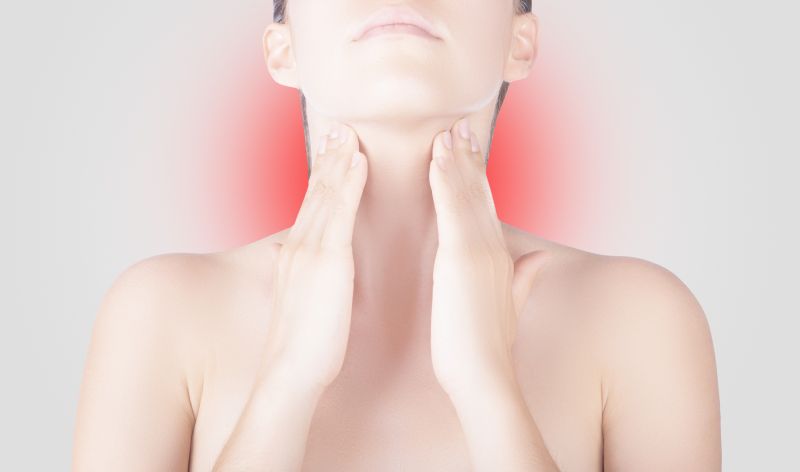
Pause what you’re doing and check in with your neck for a moment. Is it tight? Is it always tight? Perhaps you rub it. Maybe you stretch it. And maybe that works.
But what if your neck keeps hurting, even when you stretch, exercise, change your pillow, or yes…get a massage?
The answer may not be your neck at all but rather what lies above and within! Your neck doesn’t work in isolation. (As you know as a smart reader of my blog posts!) It is part of a much larger system that includes your shoulders, upper back, head, jaw, and even your tongue. (And actually, through fascial chains, connects all the way to your feet!)
Yes – your tongue, even as strange as that sounds. I’ve recently been learning a great deal about the tongue and am completely fascinated! While it is a muscle (rather large as it compares to other muscles in the body), it is not one touched upon (pun intended) in massage therapy school.
So, let’s take a closer look.
First, why does your neck hurt?
There are many possible reasons for neck pain. Sitting at a computer for hours, looking down at your phone, repetitive activities, stress, exercise, an injury, arthritis, poor sleep, and simply holding your body in the same position for too long can all contribute.
Your neck muscles are constantly working to support and position your head. When certain muscles are doing more work than they are accustomed to, they can become overworked, tender, or guarded.
The muscles around your neck also don’t work independently. They interact with the muscles of your shoulders, upper back and head. And they are the complementary balance point of the body working with the pelvis. They are also “helper” muscles – lift a heavy object and your neck says “oh, I can help!”
This is one reason massage therapy can be helpful for someone experiencing muscular neck tension. A massage therapist isn’t only looking at only the place that hurts. She (or he) will also assess and work with other areas of the body because tension in one area can influence how another area moves and functions.
However, it is true that research on massage for neck pain is mixed, and massage isn’t a cure-all. A 2024 systematic review found that the evidence for massage in subacute and chronic neck pain varied depending on what massage was compared with, with limitations in the quality and consistency of the studies. Other research suggests massage and soft-tissue techniques can provide short-term improvements in pain and tenderness.
In other words, massage may help, but it is also worth asking a bigger question:
Why are those muscles getting so tense in the first place? That’s where things get interesting.
Your jaw and your neck are more connected than you might think
Do you clench your teeth when you’re concentrating? Do you wake up with a sore jaw or grind your teeth at night? Do you notice yourself holding tension in your face when you’re stressed?
Your jaw muscles and your neck muscles work together as part of the larger head-and-neck system. An d research has found a meaningful relationship between jaw disorders and neck symptoms. People with temporomandibular disorders, commonly called TMD, have been found to have more neck disability, reduced neck mobility and differences in neck muscle endurance. More recent research also found that people with neck pain have a higher prevalence of TMD and more tenderness in the muscles involved in chewing.
That doesn’t mean your jaw is necessarily causing your neck pain. The relationship is more complicated than that. Your neck can influence your jaw, and your jaw can influence your neck. Stress can influence both.
This is why a great massage therapist will pay attention to more than just your cervical muscles when you’re experiencing persistent neck tension.
Now let’s talk about your tongue
This is the part most people don’t think about; I certainly did not.
Your tongue is not simply something you use to taste food and help you talk. It is a highly active muscular structure that participates in breathing, swallowing, chewing and resting posture. Did you know your tongue should rest on the roof of your mouth? Did you know it can be trained and strengthened just like any other muscle?
Sometimes our muscles need support from a massage therapist or a physical therapist. But in the case of the tongue, Oral myofunctional therapy (OMT) is the star! OMT looks at how the muscles of the mouth, face and jaw function together, including the position of the tongue when you’re resting, breathing, talking and swallowing.
According to the American Speech-Language-Hearing Association, a typical oral resting posture involves the lips together, nasal breathing, the teeth slightly apart, and the tongue resting toward the palate. Orofacial myofunctional disorders can involve altered tongue resting posture, mouth-open posture, tongue thrusting and other changes in oral function.
Why does that matter to your neck? Because your tongue isn’t floating around by itself, or just resting behind your teeth.
It is connected through a network of muscles and connective tissues in the floor of your mouth and around the hyoid bone, which sits in the front of your neck. The hyoid is unusual because it doesn’t directly articulate with another bone. Instead, it is suspended by muscles and connective tissues that connect the tongue, jaw, throat and neck.
So when you’re thinking about head and neck tension, the tongue is worth considering as part of the larger system.
That doesn’t mean that a “bad tongue posture” is the hidden cause of everyone’s neck pain. The research does not support making that kind of blanket claim. But it does give us another reason to think about how the jaw, tongue, breathing and neck function together.
What happens when your tongue isn’t resting where it should?
For some people, nasal breathing difficulties, allergies, structural differences, habitual mouth breathing or other factors can make a closed-mouth, nasal-breathing posture difficult to maintain.
And when the mouth stays open, the tongue and jaw may adopt a different resting position which can become a pattern. Your body is remarkably good at adapting to the positions and movements you repeat all day long.
This new pattern can define how you breathe (there are connections to sleep apnea), how you talk (connections to speech problems), tooth and gum problems, and even the overall skeletal structure of the face.
Don’t be too quick to blame the tongue, but it is important to consider ALL the muscles at play when we think of the function of the neck.
Your tongue, jaw, breathing and neck are part of the same functional neighborhood, and sometimes looking beyond the painful spot can give us useful clues.
What does this mean when you get a massage?
This is one reason a good massage isn’t simply about finding the sore spot and rubbing it until it feels better.
During an intake, your therapist may ask questions about your work, exercise, sleep, stress, headaches, jaw tension and other patterns.
If you tell us that your neck is always tight and you also wake up clenching your teeth, for example, that gives us different information than simply saying, “My neck hurts.”
Your massage therapist may work with the muscles around your neck, shoulders, upper back and head. Depending on training and scope of practice, they may also work with muscles around the jaw and face.
And if your symptoms suggest that something beyond massage may be contributing, that’s important information too.
A massage therapist does not diagnose TMD, airway disorders, swallowing disorders or other medical conditions. But we can notice patterns and encourage you to talk with an appropriate healthcare professional when something falls outside the scope of massage therapy.
A simple question to ask yourself
The next time your neck feels tight, don’t immediately ask:
“What stretch should I do?”
Instead, ask:
“What is my body doing all day that might be contributing to this tension?”
Your neck may be telling you something about the rest of your body.
And sometimes, getting lasting relief isn’t about working harder on the painful spot. It’s about understanding the bigger picture!
Curious to learn more? Book your massage with Boundless Body and Wellness in Arvada, CO.