“Get Coached”: What’s the Difference Between App Coaching and Real Health Coaching?
Have you noticed how many weight loss apps are now offering coaching? You download the app, answer a few questions about yourself, enter your goals, and suddenly you have access to a “coach.” Maybe someone sends you a message every few days. Maybe you get a reminder when you have not logged your food or completed your workout. Maybe someone checks in to see how things are going. For some people, this kind of support can be helpful. Accountability can be a powerful motivator, and having a place to track your habits can make it easier to pay attention to what you are actually doing.
But as a National Board Certified Health & Wellness Coach, I think there is an important distinction that gets lost when we use the word “coaching” for all of these different services. There is a difference between accountability, access to information, and actual health coaching. They can overlap, but they are not the same thing.
The National Board for Health & Wellness Coaching, or NBHWC, defines health and wellness coaching as an evidence-based, client-centered process that helps people develop and achieve their own health and wellness goals. That definition is important because it puts the client at the center of the process. A professional health coach is not simply handing you a plan and asking you to follow it. The coach is working with you to understand what you want, what matters to you, what is getting in your way and what changes are realistic within the life you actually live. NBHWC describes the coach as an accountability partner who supports self-directed behavior change rather than someone who simply tells the client what to do.
Most of us already know a lot about what we are “supposed” to do. We know we should probably eat more vegetables, move our bodies, get enough sleep, drink more water, manage our stress and make healthy choices. We have been hearing versions of this advice for decades. And yet knowing what to do and actually doing it are two very different things.
If information were enough, none of us would ever eat when we are stressed, stay up too late, skip a workout because we are exhausted or find ourselves standing in front of the refrigerator eating something we never intended to eat. We would simply make the healthy choice every time because we already know what that choice is. But human behavior is much more complicated than that.
This is where the difference between accountability and coaching becomes much clearer.
An app might ask whether you completed your goal. A coach is more likely to become curious about what happened when you did not. If you planned to walk for 30 minutes and did not do it, the important question may not be, “Why didn’t you follow the plan?” It might be, “What got in the way?” Perhaps you were too tired after work. Perhaps the goal was unrealistic. Perhaps you actually hate walking. Perhaps you felt guilty taking 30 minutes for yourself. Perhaps there is something else happening in your life that needs attention before a daily exercise goal is going to feel possible.
That conversation can change everything because it helps you understand the behavior instead of simply judging whether you succeeded or failed.
This is also why generic health information can only take us so far. There is an incredible amount of health information available to us today. We can ask Google a question, watch a video, listen to a podcast, download an app or ask AI for a list of healthy habits in a matter of seconds. We are not exactly suffering from a lack of information. In fact, sometimes we are suffering from too much information.
The problem is that even good information is still general. A recommendation that is helpful for one person may be completely unrealistic for another. One person may need more structure, while another person has spent years feeling controlled by rules. One person may thrive on tracking food and exercise, while another person becomes anxious and obsessive when everything is measured.
Individualized, client-centered coaching is the true magic of health coaching. The coach is not supposed to come into the relationship with a predetermined agenda and assume that the same solution will work for everyone. The client’s goals, values, preferences, strengths and circumstances are part of the coaching process.
That does not mean a health coach never provides information. A trained coach can share evidence-based information when it is appropriate and within their scope of practice. The difference is that information is not the entire service. The coach is helping the client figure out how that information applies to their own life and what they actually want to do with it.
This is one of the things I love about health coaching. I do not need to be the expert on your life. You are. You know what your days look like. You know what has worked for you in the past and what has not. You know what you have tried, what you are tired of trying and what you are genuinely willing to change. My job is to help you get curious about those things and to help you identify the patterns that may be keeping you stuck.
That is also why a good health coach is not necessarily going to give you a list of things you need to fix, but rather facilitate behavior change. The goal is to help you to develop your own goals and strategies for sustainable change.
So does that mean weight loss apps are bad? Absolutely not. Technology can make health support more accessible and affordable. Apps can be useful for tracking habits, providing education, sending reminders and creating accountability. Some digital health companies also employ professionally trained health coaches, so the fact that coaching happens through an app does not automatically make it less legitimate.
The better question is what the app actually means when it says, “Get coached.”
Are you getting automated reminders? Are you primarily being held accountable for following a predetermined program? Are you receiving general health information? Are you communicating with a person who is following a specific script or set of recommendations? Or are you having an individualized coaching relationship where someone is helping you explore your goals, motivations, barriers, habits and choices?
Those experiences can look very different from one another, even though they may all be marketed as coaching.
If you are considering hiring a health coach, it is worth asking a few questions before you sign up. Find out what training the coach has and whether they hold a recognized credential such as the National Board Certified Health & Wellness Coach credential. Ask what a typical coaching session looks like and how individualized the process is. Ask whether you will be given a predetermined plan or whether you will work with the coach to identify your own goals. Most importantly, ask what happens when you struggle.
Real life is messy. You are going to have a bad week or your typical routine will change. You will get off course and start questioning…everything. A good coaching relationship does not treat those moments as proof that you have failed. Instead, they become opportunities to understand what happened and learn something that can help you move forward. Which is a very different experience from simply being told to try again tomorrow.
I am not suggesting that you delete your favorite health app or stop tracking your habits if those things are helping you. If an app reminds you to drink water, motivates you to walk or helps you notice patterns in your sleep, use it. If accountability is what you need right now, there is nothing wrong with that.
I simply want you to know that accountability is only one piece of health coaching. A real coaching relationship goes deeper than whether you checked the box today. It gives you a place to explore why you do what you do, what you actually want to change and what might make that change sustainable.
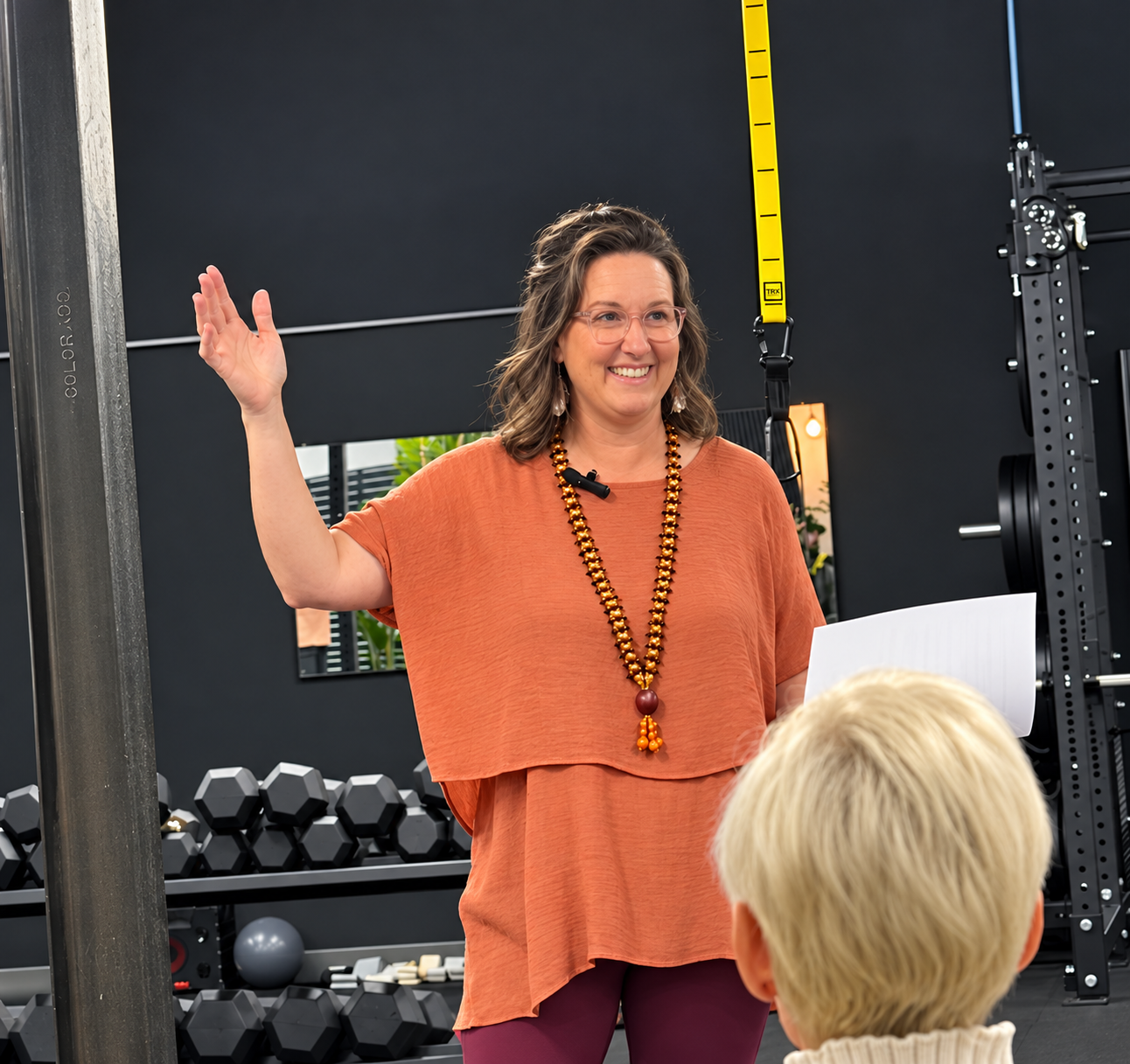
Ultimately, the goal of health coaching isn’t to create another person or program you depend on to make healthy choices. It’s about helping you better understand yourself, build confidence, and create sustainable habits that work for your life. If you’re ready to move beyond tracking habits and discover what personalized health coaching can do for you, Amber at Boundless Body & Wellness is here to help. As a National Board Certified Health & Wellness Coach serving Arvada, Colorado, and the surrounding Denver Metro area, Amber provides individualized support to help you overcome obstacles, build healthier habits, and create meaningful, lasting change. Reach out to Amber today to learn how health and wellness coaching can help you move forward with confidence!